Turn off one of the busier Fulham roads and you might find yourself on a cobbled lane, lined with low, garage fronted houses and hardly a car passing through. It’s a different pace entirely. These are mews houses, and if you’ve spent any time browsing properties for sale in Fulham, you’ve probably noticed they rarely sit on the market long, and they rarely come cheap either.
There’s a reason for that. A mews house asks more of a buyer’s budget than a flat of the same size, sometimes more than a full sized terrace on the next street. That price gap isn’t random. It comes down to what these buildings are, where they came from, and what they still offer that most London housing simply can’t.
What Is a Mews House
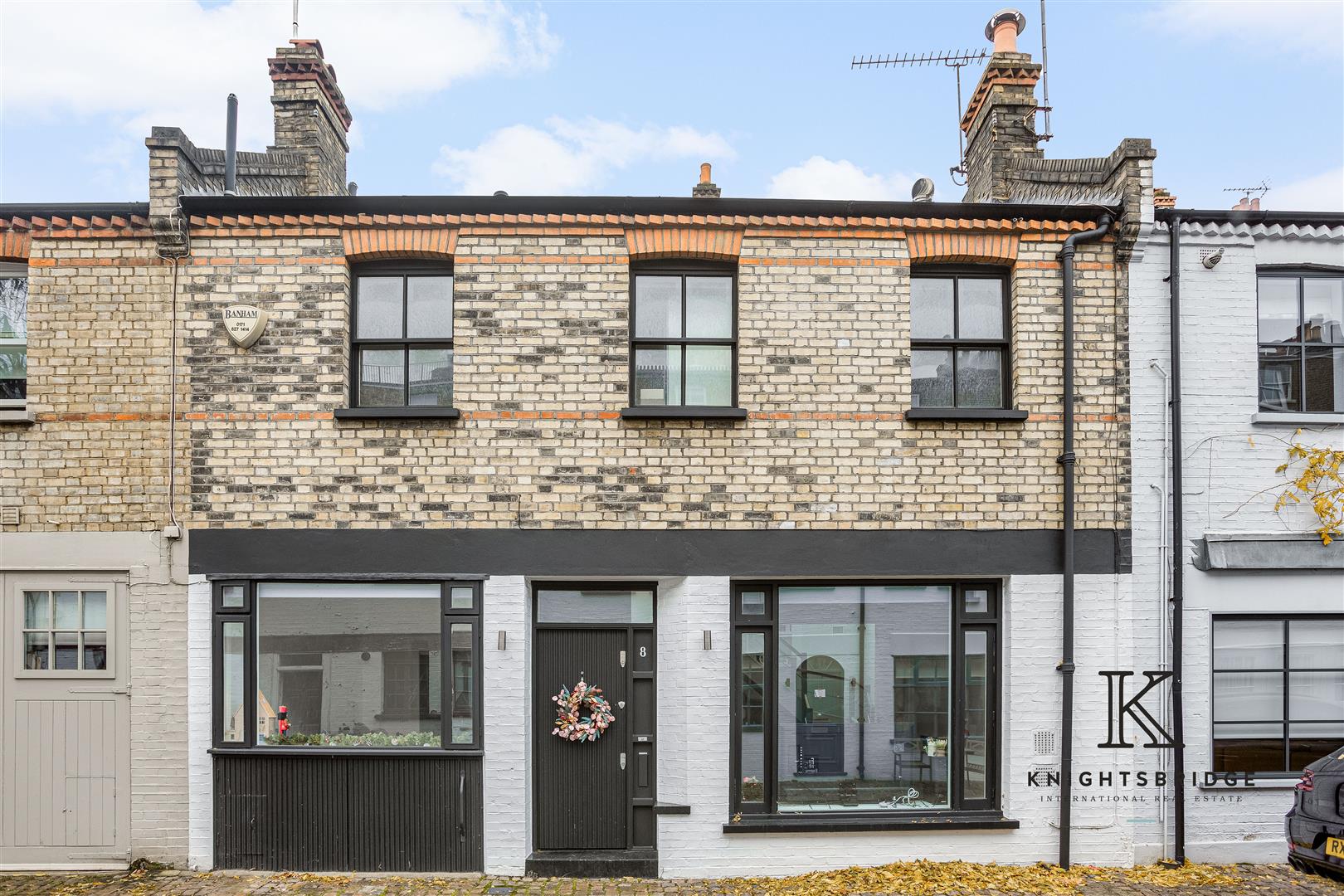
At its core, a mews house is a converted stable. Two or three storeys, built along a private lane behind a grander row of townhouses, with the ground floor originally used to house horses and carriages and the space above set aside for stable staff. Walk into one today and that ground floor is more likely to be a garage, an entrance hall or a reception room, with bedrooms and living space above. The lane itself tends to be short, self contained and quiet, since these streets were never meant to carry through traffic. That’s really the whole appeal in one sentence: a proper house, tucked out of sight, on a street that nobody passes through by accident.
A Short History of Mews Houses in Fulham and London
The word itself has a strange origin. It goes back to the King’s Mews at Charing Cross, where royal hawks were kept while they moulted, or “mewed” in the old French sense of the word. The Royal Collection Trust traces the site back to the reign of Richard II in the late fourteenth century, on what is now the National Gallery. A fire in 1534 destroyed the original building, and when it was rebuilt as stables the name simply carried over. From that point on, “mews” meant horses, not birds.
As London grew outward through the Georgian and Victorian eras, the pattern repeated itself street after street. A grand terrace would go up facing the main road, and behind it a row of stables and coach houses for the horses, carriages and staff. Fulham followed the same blueprint as it developed, which is why so many of its mews lanes still sit exactly where you’d expect, tucked in behind the older residential streets. When cars replaced horses in the early twentieth century, most of these buildings became garages, and over the following decades they were slowly converted into full time homes. What started out as service buildings for someone else’s house have ended up among the most desirable addresses in the city.
Why Fulham Mews Houses Command a Premium
There Are Only So Many Left
Mews houses were never built in huge numbers to begin with, and no one is building more of them now. A mews street that’s fully built out stays that way. In a borough where buyers are already competing hard for period property, that fixed and shrinking supply does exactly what you’d expect to price.
Most Are Freehold
Unlike the flats that make up much of the Fulham market, mews houses are usually sold freehold. No ground rent to think about, no lease running down, and full control over your own building. For anyone coming from a leasehold flat, this alone is often reason enough to make the switch, and it’s one of the first questions buyers ask us when they view a mews property.
Conservation Area Status Protects Them
Large parts of Fulham fall inside a conservation area, and mews lanes are frequently at the centre of them. The London Borough of Hammersmith and Fulham manages dozens of these designated areas across the borough, each with its own published boundary and character guidance. That protection cuts both ways. It keeps the street looking the way it always has, which supports value over time, but it also means any work you want to do needs planning permission.
Parking You Won’t Find Anywhere Else
Because these buildings started life as coach houses, plenty still come with an integrated garage or a private space right at the front door. Anyone who has hunted for a residents’ parking permit in central Fulham knows how rare that actually is. It’s a small detail on paper and a genuinely big deal in practice.
Quiet, Character and a Bit of Privacy
There’s no through traffic on a mews lane, so the noise you’d expect on a main road just isn’t there. Add original features like exposed beams, sash windows and old coach house doors, and you get a kind of character that doesn’t exist in new build stock at any price. For buyers who want to feel tucked away without actually leaving Fulham, it’s hard to beat.
What to Consider Before Buying a Mews House
None of this means a mews house suits every buyer. A few things are worth thinking through before you make an offer.
- Light can be an issue, since many only have windows on one side of the building
- Ceilings tend to sit lower than in a Victorian or Georgian terrace nearby
- Rooms and storage are usually smaller than in a comparable family house
- There’s often nowhere to keep bins outside, so they end up inside the house
- Some mews streets still charge a private estate fee even though the house itself is freehold
- Any renovation work will likely need planning permission because of conservation rules
None of these are reasons to write off a mews house. They’re just things worth raising with an agent who actually knows the street, because conditions change a lot from one Fulham mews to the next, sometimes within the same postcode.
The Fulham Property Market Right Now
Fulham has held up better than a lot of Prime South West London through the recent softening in prices. According to the Office for National Statistics, the average house price across Hammersmith and Fulham stood at £726,000 in June 2026, provisional figures that still placed the borough fifth highest for average price across the whole of London. Within that number, mews houses tend to sit above the local average, and that gap has held even where demand for standard flats has cooled, simply because there’s no substitute for what these properties offer.
Where to Find Mews Houses in Fulham
Mews lanes are scattered across SW6, often just a turn or two off the streets you’d already recognise. If you’re weighing up a mews house against something more conventional, our look at Gowan Avenue gives a feel for the kind of roads these mews lanes sit behind, and if a flat is still on your shortlist, our piece on buying a flat in Fulham sets out how that compares.
How Knightsbridge International Real Estate Can Help
We work these streets, not just this postcode, and that distinction matters more than it sounds with mews property. Two lanes a few hundred metres apart can carry completely different service charges, planning histories and price expectations, and that’s the kind of detail you only pick up from being local. As estate agents in Fulham, we see which mews houses come up rarely, which ones already have permission granted for extensions, and which are worth waiting for.
If you’re not sure what buying with an agent actually involves, our guide on meeting a property buying agent walks through that first conversation and what tends to come out of it. And if you’re on the selling side and want a straight answer on what your Fulham home is worth, that’s a conversation we’re happy to have without any obligation attached.
You can get in touch with us now, and we’ll guide you through buying or selling your next Fulham mews house with the kind of detail you won’t find in a listing description.
FAQs
Q. Are mews houses freehold or leasehold?
Most are freehold, so you own the house and the land it stands on outright. That said, some are part of private estates that still charge a service or estate fee, so it’s worth checking the title and any estate terms before you buy.
Q. Why are mews houses so expensive for their size?
It rarely comes down to square footage. You’re paying for scarcity, freehold ownership, parking that’s hard to find anywhere else nearby, and a conservation area that protects the look of the street. Put those together and the price makes a lot more sense.
Q. Is a mews house a good investment in London?
Scarcity helps keep values strong over time, and freehold houses with parking in a conservation area usually stay in demand even when the wider market slows. The exact location within the mews and the condition of the house still matter, so it’s worth being selective rather than buying the first one you see.
Q. Do mews houses get planning permission for extensions easily?
It depends entirely on the street. Most Fulham mews sit inside a conservation area, which means any extension or alteration needs planning permission and has to respect the existing character of the lane. Approval isn’t guaranteed, so it’s worth checking the planning history before you buy if extending is part of the plan.
Q. What is the difference between a mews house and a townhouse?
A townhouse was built from the outset as a full sized family home, usually facing the main street. A mews house started out as the stable and coach house behind that townhouse, which is why it’s smaller, sits on a private lane, and often comes with a garage the townhouse never had.